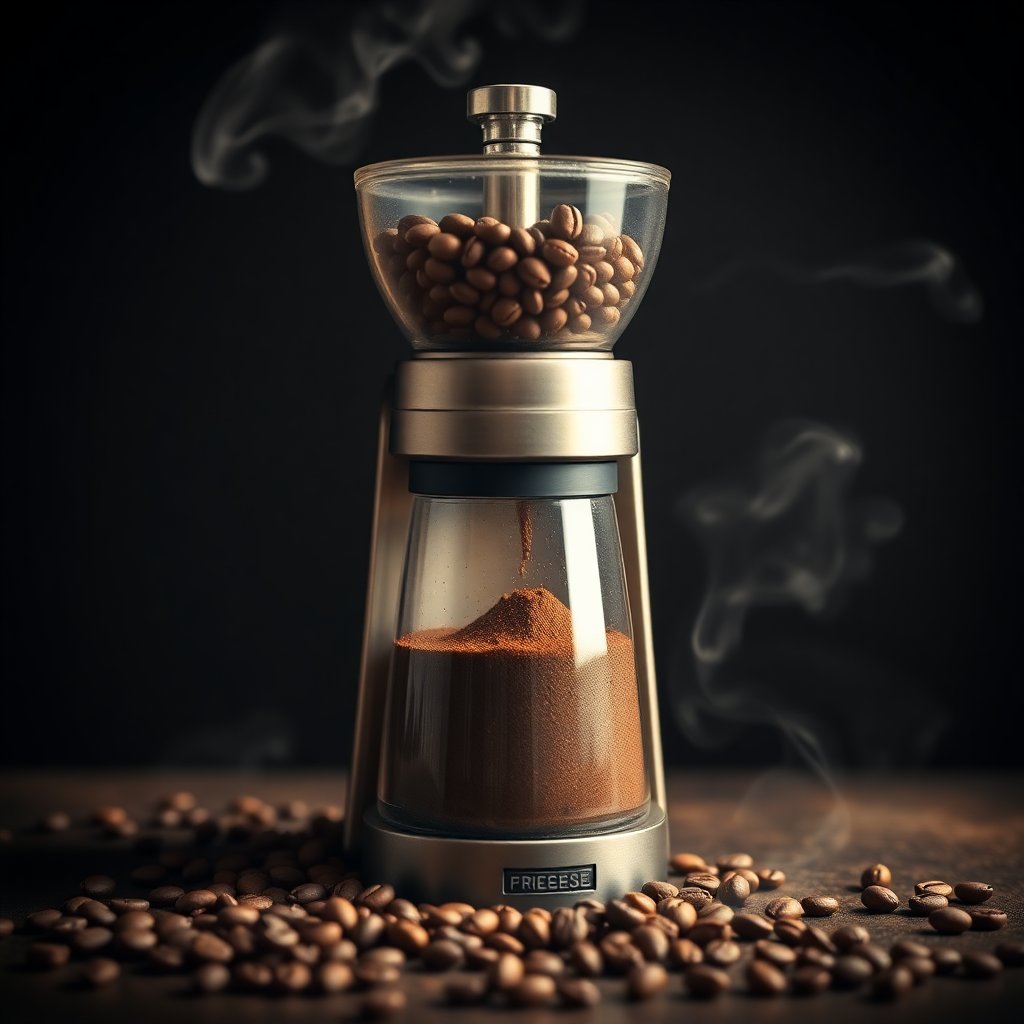
Best Coffee Grinders for Espresso: From Entry-Level to Obsessive
There's a saying in espresso circles: buy the best grinder you can afford, then save up for the machine. This is not hyperbole.
Your grinder determines the consistency, uniformity, and particle size distribution of your coffee grounds. No amount of good technique or expensive equipment downstream can compensate for a bad grind. A mediocre machine with a great grinder will pull better shots than a great machine with a bad grinder. Every time.
This guide covers the full range — from hand grinders that punch above their weight to prosumer flat burr machines that cost as much as a used car.
Why Your Grinder Matters More Than You Think
When espresso professionals talk about "grind quality," they're really talking about a few things:
Particle size consistency: Ideally, all your grounds are the same size. In reality, every grinder produces a range of sizes — the question is how tight that range is. Inconsistent particle sizes lead to uneven extraction (some grounds over-extract while others under-extract).
Fines generation: Very fine particles ("fines") clog the puck and cause channeling. Cheaper grinders produce more fines. Flat burr grinders generally produce fewer fines than conical burrs.
Retention: How much coffee gets stuck in the grinder between uses. High-retention grinders waste coffee and make single-dose workflow messy.
Heat: Grinding generates heat. Heat degrades volatile aromatics. Slower grinding (hand grinders) generates less heat. Some electric grinders have fans to compensate.
Hand Grinders: $60–$150
Hand grinders have had a revolution in the last few years. Chinese manufacturers — Timemore and 1Zpresso in particular — started making hand grinders with burr quality that rivals electric grinders costing 5x as much.
The obvious tradeoff: you're grinding by hand. For espresso, that's 30-60 seconds of cranking. Not ideal for weekday mornings. Fine for weekend ritual grinding, traveling, or if you're on a tight budget.
Timemore C2 Max (~$60)
The C2 Max has become the go-to recommendation for budget hand grinding. It uses stainless steel burrs with decent consistency, has a comfortable grip, and is available everywhere.
It's not as good as 1Zpresso options at the espresso grind range, but for $60 it's hard to argue with.
1Zpresso JX-Pro (~$130)
The JX-Pro is genuinely excellent. It uses 48mm stainless burrs with tight tolerances and produces notably better grind consistency than the Timemore at the espresso range. The click-stop adjustment is satisfying and repeatable.
If you're serious about hand grinding for espresso, the JX-Pro is the pick.
Entry Electric: $100–$200
Baratza Encore ESP (~$170)
Baratza makes the most-recommended entry-level electric grinders in the espresso community. The Encore ESP (the espresso-tuned version) has a wider espresso grind range and better burrs than the original Encore.
It's not a perfect espresso grinder. The conical burrs produce more fines than flat burr machines. But it's consistent, reliable, repairable (Baratza's service is legendary), and well within reach.
If you're buying your first electric grinder for espresso and have under $200, the Encore ESP is the default recommendation.
Mid-Tier: $200–$400
Eureka Mignon Silenzio (~$300)
The Eureka Mignon line is one of the best values in espresso grinding. The Silenzio uses 50mm flat burrs, is extremely quiet (as the name implies), and produces excellent grind consistency.
It's noticeably better than the Encore ESP — flatter particle distribution, less fines, better shot consistency. This is where the "grinder matters more than machine" adage really becomes apparent. Pair the Silenzio with a Gaggia Classic Pro and you'll pull shots that beat a Barista Express all day.
The Mignon line also has excellent retention management and is compact enough to fit on most counters.
Prosumer: $500+
Niche Zero (~$700)
The Niche Zero broke the espresso grinder market when it launched. Single-dose, near-zero retention, 63mm conical burrs, and a form factor that makes sense on a home counter. It went from cult product to mainstream recommendation in about two years.
The Zero retention design means every bean you put in comes out — no stale grounds from yesterday's grind. The burrs produce excellent consistency across the espresso range and work well for filter too.
The only real criticism: it's conical burrs, which some people prefer to flat. The particle distribution is excellent for a conical, but purists will note the difference.
DF64 / DF64V (~$300–$400)
The DF64 is a Chinese-made flat burr grinder that punched through the market with flat burr quality at a price point nobody expected. It uses 64mm flat burrs and is highly modifiable.
The DF64V (variable) adds direct-drive motorization for single-dose workflow. If you want flat burr performance under $400, the DF64 is the pick.
The Bottom Line
Tight budget: Timemore C2 Max hand grinder — real espresso quality for $60. You grind by hand; that's the trade.
Best first electric: Baratza Encore ESP. Reliable, repairable, good enough to learn on.
Step up: Eureka Mignon Silenzio. Flat burrs, quiet operation, notably better results.
End-game for most people: Niche Zero. Single-dose, near-zero retention, excellent grind quality.
Buy the grinder before you finalize the machine decision. The machine doesn't matter as much as you think. The grinder does.
Frequently Asked Questions
What is the best coffee grinder for espresso?
The Niche Zero (~$700) is the endgame grinder for most home baristas — single-dose, near-zero retention, excellent grind quality, and a workflow designed for espresso. For a more accessible step up, the Eureka Mignon Silenzio (~$300) delivers flat-burr quality and quiet operation. For beginners, the Baratza Encore ESP (~$170) is the most recommended starting point with genuine espresso capability.
What's the difference between flat burr and conical burr grinders?
Flat burrs produce a more uniform particle size and tend to create "sweeter," more clarity-focused espresso. Conical burrs produce slightly more particle size variation but are more forgiving for dialing in and tend to run cooler (less heat generation during grinding). Most home espresso machines work well with either style; flat burrs are preferred by precision-focused baristas, while conical burrs are more common in the sub-$300 price range.
How important is the grinder for home espresso?
The grinder is the most important variable in home espresso — more impactful than the machine. Espresso extraction quality depends entirely on consistent, finely calibrated particle size. An inconsistent grinder produces unpredictable shots regardless of machine quality; a consistent grinder enables repeatable, dial-in-able espresso even on a modest machine. Many experienced baristas spend more on the grinder than the machine.
How do I clean an espresso grinder?
Run a cleaning tablet (Grindz or similar) through the grinder monthly — these absorb oils and remove stale coffee residue from the burrs. Remove and wipe the hopper and chute with a dry cloth. For deeper cleaning, remove the burrs (check your model's manual) and brush away accumulated coffee particles with a small brush. Never use water on internal grinder components unless the manufacturer specifically says it's safe.
What grinder should I buy if I make both espresso and filter coffee?
Dual-purpose grinders require enough range for both fine espresso settings and coarser pour-over settings. The Baratza Virtuoso+ or Encore ESP handle both adequately. The Eureka Mignon line offers enough range. The Niche Zero is excellent for both. Avoid cheap grinders claiming versatility — espresso-range adjustment precision is fundamentally incompatible with very cheap burr sets, and a grinder that tries to do both at low price usually does neither well.
As an Amazon Associate we earn from qualifying purchases. This article contains affiliate links; if you buy through them we may earn a small commission at no additional cost to you.