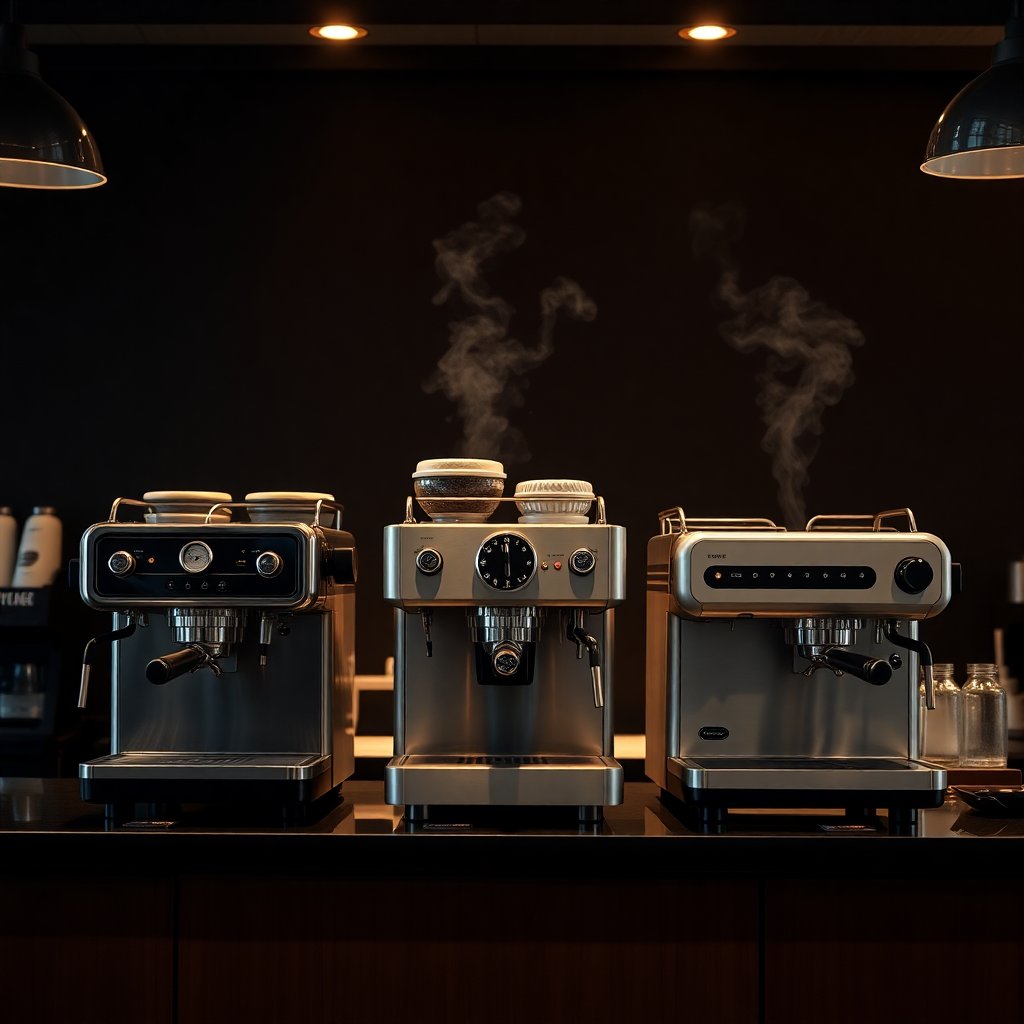
Best Espresso Machines for Home Use in 2026 — Ranked by Skill Level
The espresso machine market is genuinely confusing. There are hundreds of options across a wide price range, and most buying guides don't help because they don't tell you the most important thing first: what kind of home barista are you?
Someone who wants to push a button and get decent espresso in 30 seconds has completely different needs than someone who wants to dial in single-origin shots on the weekend. Buying the wrong machine for your skill level and patience is the number one mistake people make in home espresso.
This guide breaks the market into three tiers — Beginner, Intermediate, and Prosumer — with honest picks and honest caveats at each level.
What to Look for in a Home Espresso Machine
Before we get to specific machines, a few concepts that will make the rest of this guide make sense:
Pump pressure: Espresso requires 9 bars of pressure. Consumer machines generate this with a vibration pump (vibratory) or a rotary pump. Vibratory pumps are fine — they're noisier and shorter-lived, but they work.
Boiler type: Single boilers are cheaper and require switching between brewing and steaming. Dual boilers or heat exchange (HX) systems can brew and steam simultaneously.
PID temperature control: A PID (proportional-integral-derivative controller) gives you precise temperature control. Not strictly necessary at the beginner level, but genuinely useful once you're dialing in.
Pressure profiling: Advanced machines let you control how pressure changes throughout the shot. Interesting, but not necessary until you've been in the hobby a while.
Beginner: $150–$400
At this tier, the goal is simple: get into real espresso without spending a lot of money. You're not dialing in single-origin beans with a refractometer. You want something that makes a solid shot with reasonable consistency.
DeLonghi Dedica Arte (around $200)
The Dedica is thin, attractive, and reasonably priced. It uses a thermoblock heating system that gets hot fast. The stock basket is pressurized (forgiving of mediocre grinds), but you can upgrade to an unpressurized basket for more control.
The steam wand is functional but not great — it's a "panarello" style that produces more froth than microfoam. Good enough for cappuccinos, frustrating for latte art.
Best for: People who want a compact machine that looks good on the counter and makes decent espresso without a steep learning curve.
Breville Bambino (around $300)
The Bambino is one of the best entry-level espresso machines available. It heats up in 3 seconds (genuinely), has a 54mm portafilter, and comes with a solid steam wand that can produce real microfoam once you learn the technique.
The automatic milk frothing feature is convenient. More importantly, the Bambino uses an unpressurized basket and a proper pump — it's a real espresso machine, not a toy, at a price point that used to be unimaginable for this quality.
Best for: Someone serious about learning real espresso at a reasonable entry price.
Pod-to-Semi-Auto Transition Note
If you're coming from a Nespresso or Keurig, manage your expectations. Real espresso has a learning curve. You'll pull bad shots before you pull good ones. That's normal. If you want near-zero learning curve, a super-automatic is a better fit (see the comparison guide).
Intermediate: $400–$800
At this tier, you're buying real machines with proper features. The jump from $300 to $500+ is significant — better boilers, better steam wands, better build quality.
Breville Barista Express (around $600)
The Barista Express is the machine that turned a lot of people into home baristas. It has a built-in conical burr grinder, which means you can go from bean to shot with one machine — a real convenience advantage.
The integrated grinder isn't as good as a dedicated grinder, but it's genuinely decent. The machine itself has a solid thermocoil heating system, a 54mm portafilter, and good steam pressure.
The downside: when the grinder needs upgrading, you have to buy a whole new machine. That said, for a $600 all-in-one, it's hard to beat.
Gaggia Classic Pro (around $450)
The Gaggia Classic Pro is a legend. It's been around in various forms for decades, has a massive service community, and is one of the most-modded home espresso machines in the world.
It has a commercial-style 58mm portafilter (the standard for most upgrades), a proper single boiler, and enough power to steam milk competently. It ships with some quirks — the pressurestat is set high from the factory — but these are well-documented and fixable.
The Classic Pro is the machine for someone who wants to learn and has an itch to tinker.
Breville Bambino Plus (around $500)
The Bambino Plus adds automatic steam temperature control to the Bambino — it'll produce microfoam automatically without manual technique. A meaningful upgrade for people who make a lot of milk drinks and don't want to develop steam wand skills.
Prosumer: $800+
This is where espresso gets serious. Prosumer machines have dual boilers or heat exchange systems, proper steam power, and build quality that will last 15+ years with basic maintenance.
Breville Dual Boiler (around $1,400)
Dual boilers mean you can brew and steam simultaneously — no waiting for the machine to switch modes. The BDB also has a PID for both boilers and a proper 58mm portafilter.
It's one of the best machines under $2,000, period. The tech specs match machines costing twice as much. The build quality is solid, though not at the level of Italian commercial-grade machines.
ECM Synchronika / Rocket Appartamento ($1,800–$2,500)
Once you're in this territory, you're buying machines that will outlast multiple machine upgrades from the brands above. Heat exchange systems, E61 group heads, rotary pumps. These machines have a cult following for a reason.
The ECM and Rocket machines require more maintenance knowledge but reward it. If you're here, you probably already know what you want.
Comparison Table
| Machine | Price | Boiler | Steam | Skill Level | |---------|-------|--------|-------|-------------| | DeLonghi Dedica | ~$200 | Thermoblock | Panarello | Beginner | | Breville Bambino | ~$300 | Thermocoil | Manual | Beginner+ | | Gaggia Classic Pro | ~$450 | Single | Manual | Intermediate | | Breville Barista Express | ~$600 | Thermocoil | Manual | Intermediate | | Breville Bambino Plus | ~$500 | Thermocoil | Auto | Intermediate | | Breville Dual Boiler | ~$1,400 | Dual | Manual | Advanced | | ECM/Rocket | $1,800+ | HX/Dual | Manual | Prosumer |
The Bottom Line
Buy a Breville Bambino if you want the best value entry point. It's a real machine at a real price.
Buy a Gaggia Classic Pro if you want to learn, tinker, and build skills. You'll outgrow a Bambino eventually; you might never outgrow a Classic.
Buy the Breville Dual Boiler if you want to skip the upgrade cycle and land on something you'll keep for a decade.
Don't buy the machine before you buy the grinder. The grinder is more important than the machine — and that's not an exaggeration.
Frequently Asked Questions
What is the best home espresso machine in 2026?
For most home baristas, the Breville Dual Boiler represents the best value in the enthusiast tier — separate boilers for brewing and steaming eliminate the temperature compromise of single-boiler machines and allow simultaneous steam and brew. The Gaggia Classic Pro is the best sub-$500 choice for those willing to develop technique. At the accessible end, the Breville Bambino is still the easiest path to real espresso.
What espresso machine should a beginner buy?
The Breville Bambino (~$300) is the most recommended beginner machine — it heats up in 3 seconds, produces genuine 9-bar pressure, has a steam wand, and doesn't require extensive technique to get decent results. Pair it with a Baratza Encore ESP grinder (~$170) for a complete setup under $500 that will serve you well for years.
Is a dual boiler espresso machine worth it?
For home baristas who make multiple drinks per session (especially when steaming milk for lattes and cappuccinos), yes. Dual boiler machines maintain separate brew and steam temperatures simultaneously — no waiting for the machine to thermally stabilize between brewing and steaming. The Breville Dual Boiler (~$1,400) provides this capability at a price that's actually accessible for serious enthusiasts.
How much should I spend on a home espresso machine?
Budget allocation that makes sense: $300–500 on the machine, $150–250 on the grinder. This $450–750 total produces excellent home espresso. Spending $600 on the machine and $50 on the grinder produces worse results than the inverse. Many experienced home baristas argue that a $200 grinder with a $300 machine beats a $500 machine with a $100 grinder.
How long does a home espresso machine last?
Well-maintained machines from established brands (Breville, Gaggia, Rancilio, La Marzocco) routinely last 10–20 years. The key is regular maintenance: monthly backflushing, periodic group head cleaning, descaling based on your water hardness, and replacing gaskets every 1–2 years as they harden. The Gaggia Classic Pro is particularly known for longevity and repairability.
As an Amazon Associate we earn from qualifying purchases. This article contains affiliate links; if you buy through them we may earn a small commission at no additional cost to you.