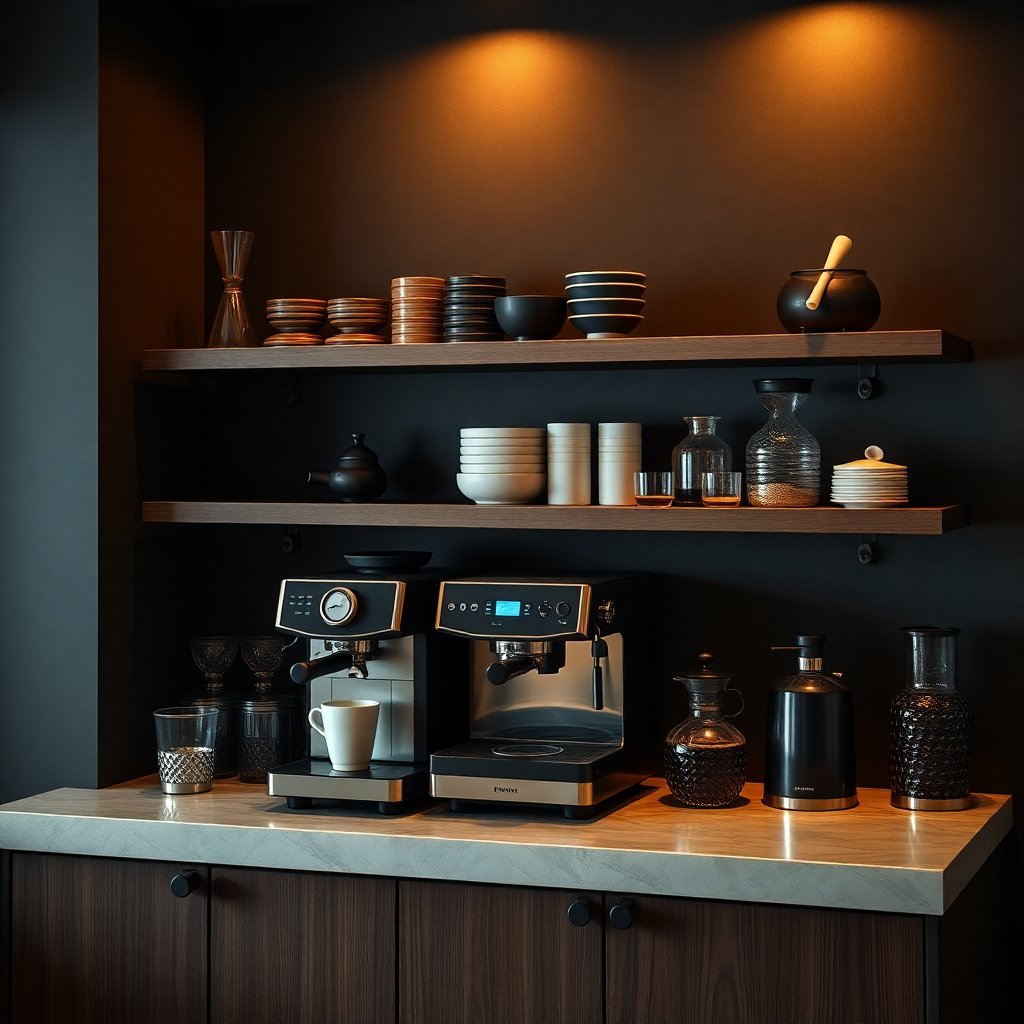
How to Set Up a Home Coffee Bar on Any Budget
A home coffee bar doesn't have to be expensive. It doesn't have to look like a specialty cafe. What it does have to do is work — consistently produce the drinks you want without frustrating you every morning.
The secret to a good home coffee setup is buying things in the right order, at the right tier for your commitment level. This guide walks through three budget tiers with honest picks at each.
Before You Buy Anything
Ask yourself two questions:
-
What drinks do you actually want to make? If you want lattes and cappuccinos, you need espresso. If you're happy with strong drip coffee, you don't need espresso equipment.
-
How much time do you want to spend each morning? This determines whether you want manual equipment (more control, more time) or automatic (less time, less control).
If you answered "espresso drinks, and I have 5-10 minutes in the morning" — this guide is for you.
Tier 1: $200 Budget — The Starter Setup
At $200, you can get into espresso-adjacent territory. True espresso at this price means compromises, but you can make excellent drinks.
Option A: Moka Pot + Frother Setup (~$60–80 total)
A moka pot doesn't make true espresso (it brews at about 1-2 bar, not 9), but it makes strong, concentrated coffee that works as an espresso base in lattes and cappuccinos.
What you need:
- Bialetti Moka Express (~$35–50): The original. Well-made, lasts forever, makes excellent stovetop espresso.
- Nespresso Aeroccino (~$50): Heats and froths milk at the push of a button.
- Basic hand grinder (~$30-60): Freshly ground coffee is dramatically better than pre-ground.
This setup makes genuinely good drinks. The limitation is the moka pot's pressure — you can't pull a true espresso or develop crema. But for the money, it's hard to beat.
Option B: Entry Pod Machine (~$100–150 total)
If you want zero learning curve and convenience above all else, a Nespresso Essenza Mini at around $100 makes real espresso from pods. No technique required.
Trade-offs: ongoing capsule costs, less control, can't use your own coffee. For some people, that's a fine trade.
Shop Nespresso entry machines on Amazon
Tier 2: $500 Budget — The Real Espresso Setup
At $500, you can build a genuine home espresso setup with real equipment. This is where the hobby starts.
The $500 Kit
Espresso machine: Breville Bambino (~$300)
The Bambino is the best value entry-level espresso machine available. It heats up in 3 seconds, uses a real pump and unpressurized basket, and comes with a steam wand that can produce real microfoam.
Shop Breville Bambino on Amazon
Grinder: Baratza Encore ESP (~$170)
The Encore ESP is the standard recommendation for entry-level espresso grinding. It's reliable, grind-range is appropriate for espresso, and Baratza's service and repair support is excellent.
Don't skip the grinder. Pre-ground coffee defeats the purpose of a $300 espresso machine.
Total: ~$470. Leave the remaining $30 for a knock box and a decent tamper.
This setup will make excellent espresso drinks with some practice. The Bambino's steam wand has a learning curve, but you'll be pulling good shots within a week.
Tier 3: $1,500+ — The Prosumer Setup
This is the serious home barista setup. You're not upgrading from this one.
The $1,500+ Kit
Espresso machine: Breville Dual Boiler (~$1,400)
Dual boilers mean you can brew and steam simultaneously. Precise temperature control. Proper 58mm portafilter. This machine will last 10+ years.
Shop Breville Dual Boiler on Amazon
Grinder: Eureka Mignon Silenzio or Niche Zero (~$300–700)
At this level, the Mignon Silenzio is excellent for the price. The Niche Zero is better but costs more — single-dose, near-zero retention, outstanding consistency.
Supporting gear:
- Precision espresso scale (~$30–100)
- WDT distribution tool (~$20)
- Proper tamper (~$30)
Total: ~$1,700–2,000+
Comparison: Is It Worth It?
| Tier | Cost | Quality | Learning Curve | |------|------|---------|----------------| | Moka pot + frother | ~$80 | Good | Low | | Breville Bambino + Encore | ~$470 | Very good | Medium | | BDB + Niche Zero | ~$2,000 | Excellent | Medium-high |
The $470 setup produces 80% of the result for 25% of the cost. The prosumer setup closes the gap significantly, but the diminishing returns are real.
Counter Space
Plan your counter space before you buy. An espresso machine + grinder + accessories takes 2-3 feet of counter space minimum. The BDB is a large machine — it's not a small kitchen appliance.
If space is tight: the Breville Barista Express has a built-in grinder and takes up roughly the same footprint as the machine alone.
What to Buy First
Buy the grinder before you finalize the machine choice. A great grinder paired with a modest machine will beat a great machine with a bad grinder.
Start simple. You can always upgrade the machine; a good grinder is a good grinder regardless of what sits next to it.
Frequently Asked Questions
How much does a home coffee bar setup cost?
A functional home espresso bar runs $450–700 for a solid entry setup: a quality espresso machine ($300–500) plus a capable burr grinder ($150–250). A complete home coffee bar that covers multiple brewing methods (espresso, pour-over, cold brew) with quality equipment across the board runs $800–1,500. The single most impactful place to spend is the grinder — don't underinvest here in favor of a flashier machine.
What do I need for a home coffee bar?
The essentials: (1) espresso machine or preferred brew method, (2) a burr grinder (this is non-negotiable — blade grinders produce unacceptable coffee), (3) a scale for accurate dosing, (4) a milk frother if you make lattes, and (5) a water kettle. Optional but impactful: a tamping mat, WDT distribution tool, a quality tamper, and a shot timer. These accessories improve shot consistency significantly.
What is the best layout for a home coffee bar?
Put the grinder and machine side by side with the machine on a slight platform (a wooden block works) so the portafilter handle aligns ergonomically for loading. Keep your tamping mat between the grinder and machine. Store beans, tools, and accessories in a drawer or shelf directly below. Good lighting matters — a well-lit coffee bar is more enjoyable to use and makes it easier to see your shots.
Should I buy a coffee subscription for my home bar?
Yes, if you're pulling espresso daily. Subscription roasters ship freshly roasted beans (typically 3–5 days from roast to door) on a schedule that keeps you well-supplied without worrying about planning. Trade, Atlas, Onyx, and Counter Culture are consistently recommended specialty roasters with subscription options. Avoid grocery store beans for espresso — staleness is the most common reason home espresso disappoints.
Is a home coffee bar worth the investment?
For daily coffee drinkers, the math is straightforward — a $5–7 daily café espresso drink costs $150–200/month. A $600 home setup with $20/week in specialty beans runs $80–100/month. You break even in 3–6 months while drinking better coffee at home. For people who care about their morning coffee and drink it daily, a home coffee bar consistently delivers better value and quality than any café routine.
As an Amazon Associate we earn from qualifying purchases. This article contains affiliate links; if you buy through them we may earn a small commission at no additional cost to you.